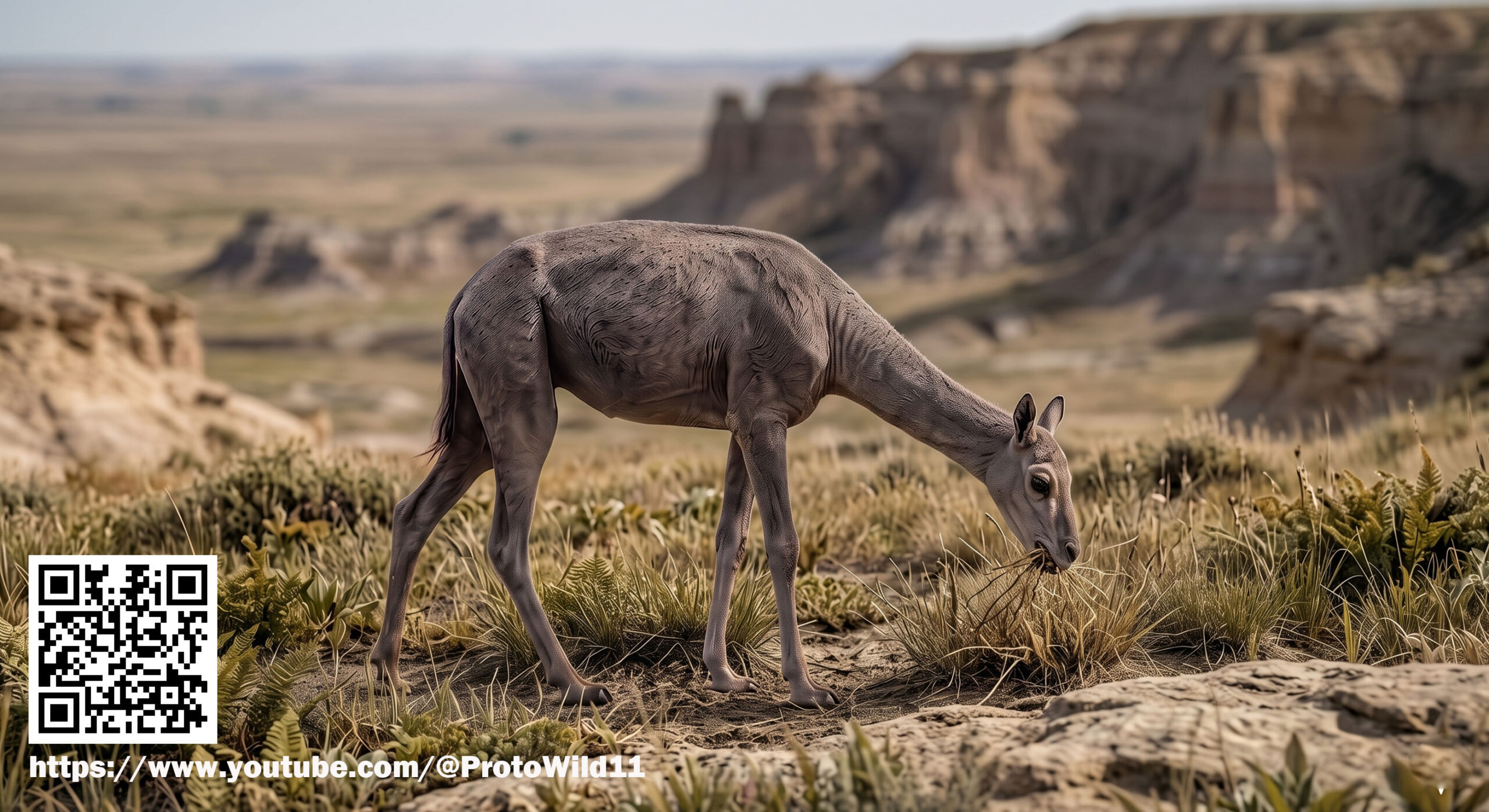
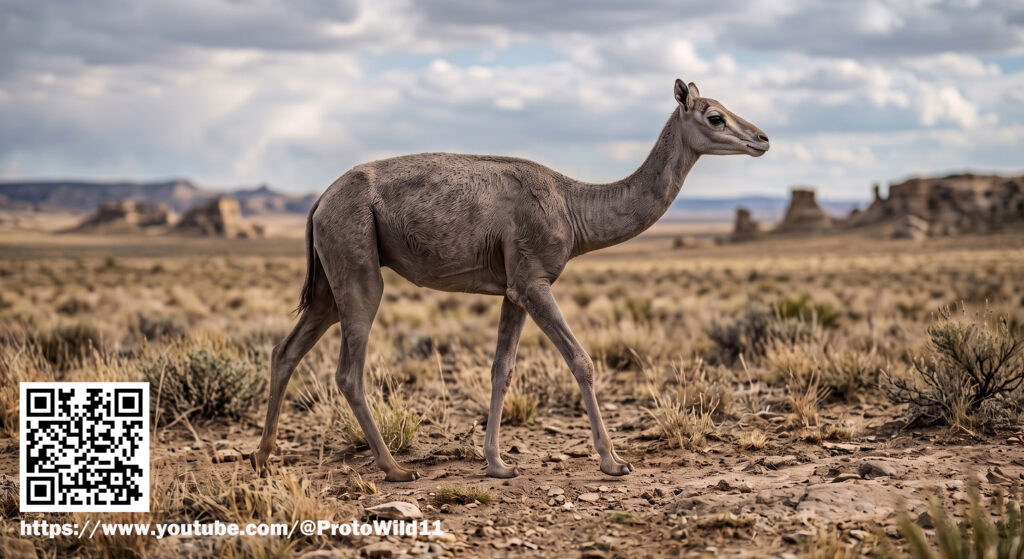
Spanning the open plains and semi-arid scrublands of Miocene North America, Stenomylus was one of the most unique and delicate evolutionary branches of the camelid family. Standing only about 60 centimeters tall at the shoulder, this miniature herbivore possessed a slender, gazelle-like frame optimized for swift evasion and grazing across prehistoric grasslands long before modern camels evolved their iconic desert features.
Explore our technical reconstruction process as we analyze the distinct physical features of this ancient miniature mammal and break down the complex technical hurdles behind rendering its quick, agile locomotion in 16K ultra-high-definition video with total realism.
▶ Click the YouTube link below to watch the vivid, restored 16K ultra-high-definition video
Delicate Gazelle-Like Adaptations for Open Plains
While modern camels are known for their massive body mass, water-storing humps, and padded feet, Stenomylus evolved a completely different, lightweight body layout built for high-speed running across open plains.
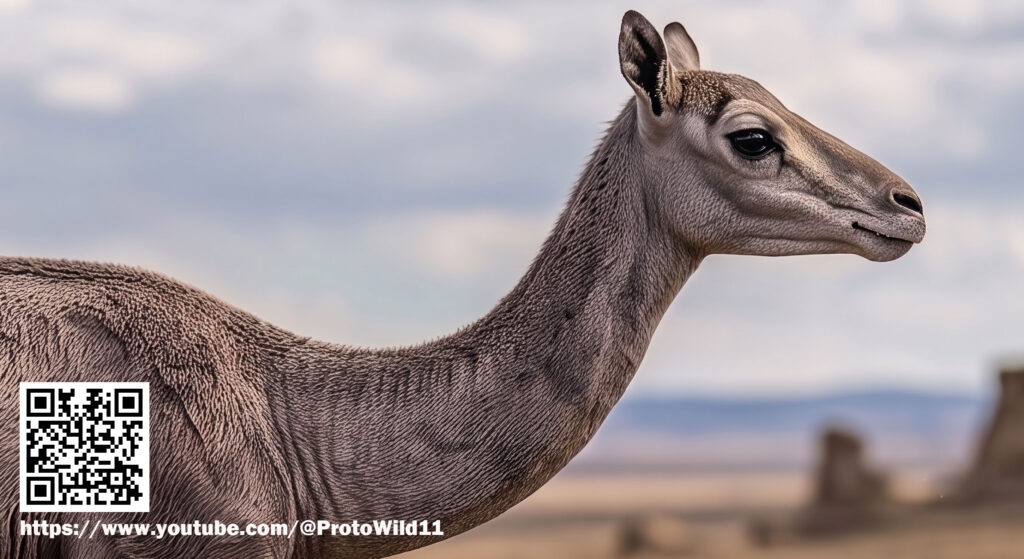
- Slender Neck and Fine Facial Features Unlike the thick, heavy heads of modern camels, Stenomylus featured an elongated, delicate skull with refined, narrow facial contours. Its large eyes were set high on the head for wide-angle predator detection, while its long, slender neck allowed it to browse comfortably on low prairie grasses.
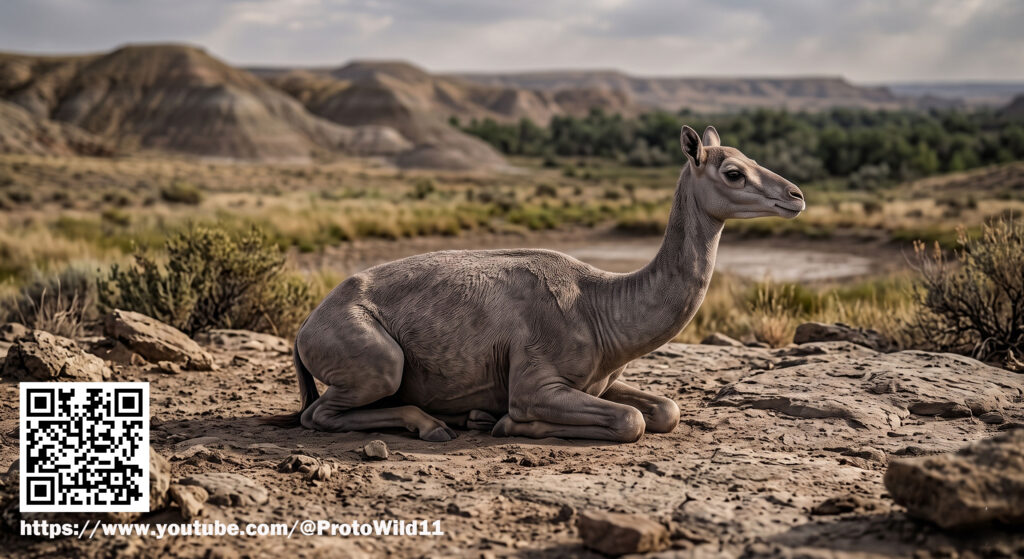
- Hump-Free Spine and Extended Leg Proportions Stenomylus possessed a clean, sleek topline without any dorsal hump whatsoever. Supported by remarkably long, thin, deer-like legs, its skeletal proportion allowed for an exceptionally light and graceful stride across uneven grassland terrain.
- Split Cloven Toes and Short Tufted Tail Instead of single horse hooves or flat camel pads, Stenomylus had two distinct, slender cloven toes on each foot, providing sharp traction on firm soil. Its tail was short and delicate, ending in a simple tuft rather than a long, sweeping horse-like tail.
The Struggle of AI Digital Restoration
Our goal was to bring this prehistoric miniature camel to life in a realistic 16K video, showcasing dusty grassland sunlight, delicate fur textures, and natural wind. However, the AI encountered severe technical friction due to deep-rooted modern camel and horse datasets.
The initial modeling phase was plagued by heavy data bias. The AI continuously distorted the facial features into a large, heavy modern camel head and stubbornly attempted to place a dorsal hump on its back. Furthermore, it repeatedly generated horse-like single hooves and long, sweeping horse tails, while shortening the long, elegant legs into squat, heavy limbs and blurring the delicate facial geometry into a blunt, featureless head.
The hardest technical challenge occurred during the motion-rendering phase, where severe morphological glitches corrupted the skeletal keyframes. As the creature moved, its slender legs repeatedly shortened into heavy stumps, the delicate skull expanded and warped, and the hump-free backline flickered into humped silhouettes. To eliminate these visual glitches, we applied strict frame-by-frame temporal locks to freeze the fine facial structure, hump-free spine, long leg proportions, and distinct cloven toes throughout the entire sequence.
The Final Prompt for Perfect Realism
To block the AI from creating a fake, video-game-style animal, we used this highly detailed prompt. It ensures the true anatomy, delicate skull, hump-free backline, and cloven toes of Stenomylus stay intact while moving.
[AI Generation Prompt] 16K RAW footage, an ultra-realistic tiny prehistoric dwarf camel Stenomylus walking with a swift, agile, graceful gait across a dusty sunlit Miocene prairie. [Anatomy & Facial Lock] Extremely small, slender gazelle-like body standing only 60 cm tall with remarkably long, thin deer-like legs. Long, delicate neck supporting a fine, refined skull with sharp facial contours and large eyes; ABSOLUTELY NO heavy modern camel head and NO blunt, featureless face. Smooth, sleek topline with a STRICTLY flat, hump-free spine; ABSOLUTELY NO dorsal hump. Feet MUST feature distinct, narrow split cloven toes; STRICTLY NO horse hooves. Short, delicate tufted tail; ABSOLUTELY NO long horse tail. Short, dense tawny coat. [Motion Lock] Temporal consistency lock during motion: the slender long leg proportions, fine facial shape, flat hump-free spine, and cloven toe structure must remain completely locked without shortening legs, growing humps, spawning horse hooves, or blurring into blunt head shapes. Ultra-realistic fine coat texture with dust particles kicking up from feet, warm low-angled sunlight creating crisp shadows. Natural shallow depth of field blurring distant prairie foliage. Ambient grassland wind with soft rustling grass and light footsteps, majestic cinematic background music. Negative Prompt: modern camel, camel head, heavy head, blunt head, featureless face, dorsal hump, camel hump, horse, single hoof, horse hoof, horse tail, long tail, short legs, squat legs, heavy body, stocky frame, morphing legs, warping spine, plastic texture, CGI style, video game graphics, artifact blur.
Documenting the surprising evolutionary paths of ancient mammal families deepens our understanding of prehistoric grassland ecosystems and preserves the legacy of Earth’s lost fauna.